















Previous
Next
Previous
Next
LEADING PHARMACEUTICALS AND MEDICAL DEVICES PROVIDER

Expect Only The Best From Us When It Comes To Restoring And Improving Health

Expect Only The Best From Us When It Comes To Restoring And Improving Health

Wellchem is an established yet constantly evolving company in the healthcare industry. We specialize in medicines, medical devices and healthcare products that are at the forefront in various specialties, ensuring that we provide the very best healthcare to medical professionals and patients alike.
Wholesaling Of Pharmaceutical Drugs And Medical Devices
at competitive pricing with a global network of suppliers and clients
Local Distribution of Quality Pharmaceuticals and Consumer Health Products
from top manufacturers in US, Europe, Korea and more
Supplying To Major Health Institutions
Medical-grade masks, gloves, vitamins and more
Sourcing Of Niche/Orphan Drugs
that are needed by healthcare professionals for rare conditions

Our Specialties

LATEST UPDATES

News & Media

The Gel that Heals: How Viscosupplementation Helps in Arthritic Joints

Dr Tan Shi Ming, Senior Consultant Orthopaedic Surgeon
Centurion Orthopaedic Centre

KNEE PAIN ON THE RISE

Osteoarthritis is the most common musculoskeletal condition affecting joints, particularly in the lower limb joints – including hips, knees and ankles. Knee osteoarthritis prevalence has increased significantly over the past few decades that up to 250 million people worldwide are affected. This prevalence is expected to rise in part due to obesity and other risk factors such as increasing age, prior knee injuries such as fractures, ligament and meniscal tears as well as the participation in endurance and high impact sports such as marathon running, football, basketball and racquet games.

WHAT IS CARTILAGE?

Joint cartilage (also referred to as articular cartilage) is a tissue made up of cells known as chondrocytes and extracellular matrix (ECM, the environment around cells). This matrix is composed of water (more than 70%) and organic components such as hyaluronic acid, collagen and other components. The composition of the ECM is important to maintain nutrition and health of the articular cartilage. Chondrocytes play a key role in keeping the joint environment healthy by producing both the building blocks of cartilage (ECM components) and the enzymes that break down old or damaged components. This balance helps the body maintain homeostasis — its way of keeping everything in check and working properly. This symbiotic relationship between the cells and its matrix is essential in ensuring the overall health and function of the articular cartilage, allowing it to withstand forces across the joint both in motion and at rest.

WHAT HAPPENS IN OSTEOARTHRITIS?

Osteoarthritis is a medical condition in which there is inflammation of the joint tissues, characterized by the degeneration of chondrocytes. This is usually precipitated by excessive mechanical loading or a prior knee injury such as ligament, meniscal or chondral injury.

Osteoarthritis often presents with symptoms of joint pain, swelling, stiffness in the early stages and joint deformities and loss of range of motion in the late stages. In advanced stages, the joint will develop contractures and impede the ability to walk.

Fig. 1 The knee joint. Cartilage lines the 3 compartments of the joint, joint fluid provides nutrition to maintain healthy cartilage.

In the early stages of osteoarthritis, too much stress on the joint or past injuries cause chondrocytes to produce more enzymes that break down cartilage. This leads to a loss of important ECM components and a decline in its quality. . In a bid to maintain the ECM, chondrocytes continue to produce increased quantities of the various ECM components — but over time, they struggle to keep up.

In the later stages of osteoarthritis, the balance between production of ECM components and degradation enzymes becomes disrupted continually. With continued wear of the chondrocytes and an altered environment, inflammation sets in — creating a vicious cycle where inflammation causes more chondrocyte damage, and the damage in turn fuels more inflammation.

WHAT IS VISCOSUPPLEMENTATION?

Various non-surgical therapeutic modalities have been used to treat osteoarthritis, each having its role and efficacy. Viscosupplementation is a non-operative, intra-articular treatment option that is based on the physiologic importance of hyaluronic acid within the ECM of articular cartilage. It usually comes in the form of hyaluronic acid injections.

The goal of this treatment is to restore the viscoelasticity of the joint. It’s similar to restoring the engine oil and shock absorbers of a car. This would reduce pain, improve mobility and restore the natural protective functions of hyaluronic acid in the joint. In the short term, patients would experience the pain relief benefits from viscosupplementation. The long-term effects are to restore joint mobility and improve joint lubrication, shock absorption and the ability to reduce mechanical stress on cartilage. Additionally, viscosupplementation provides anti-inflammatory effects, reducing symptoms produced from joint inflammation such as pain, swelling and reduced motion.

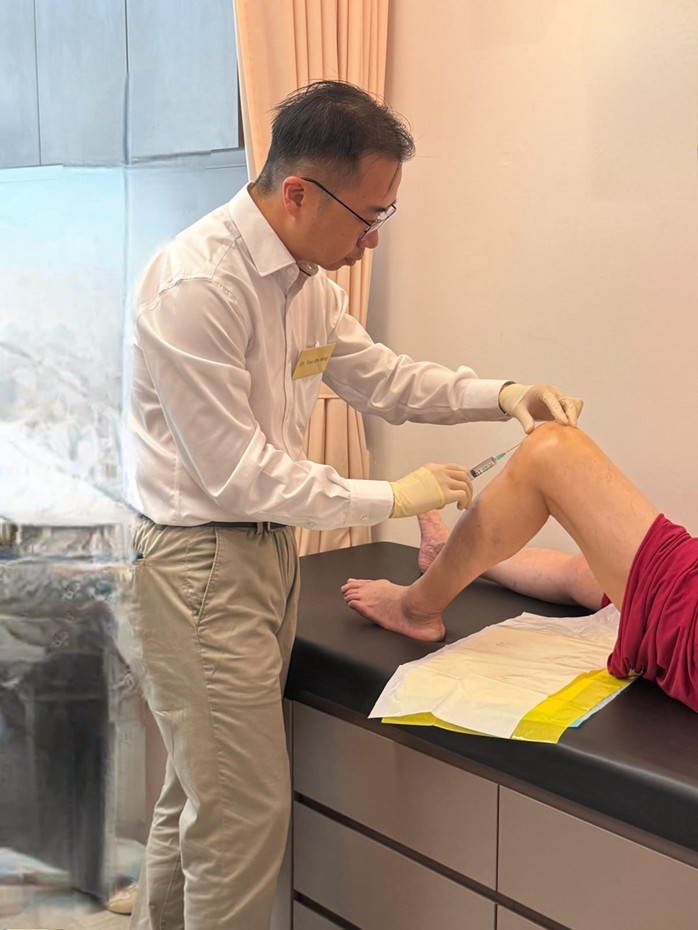
Viscosupplementation is a simple, short and highly effective treatment option for osteoarthritis of major joints such as the knee, ankle, hip and shoulder. It can be performed in a clinic or day surgery setting, under local anaesthesia, with or without mild sedation. The joint is first cleansed well with antiseptic solution, which is followed by the administration of local anaesthetic to the site of injection. Hyaluronic acid injection is then injected into the joint, followed by the placement of a comfortable bandage.

Fig. 2 Dr Tan Shi Ming administering a hyaluronic acid injection into a patient’s knee, in a clinic setting.

WHO SHOULD CONSIDER VISCOSUPPLEMENTATION?

Whilst viscosupplementation is an effective treatment option for joint osteoarthritis, it is important to undergo a proper and comprehensive evaluation of your joint condition by a trained musculoskeletal doctor before undergoing the procedure. This may entail a careful understanding of your symptoms, a confirmation of your condition and its severity with a physical assessment and tests.

Patients who have mild to moderate osteoarthritis would benefit most from viscosupplementation. These patients usually exhibit a good range of joint motion, have minimal bony deformities and exhibit early symptoms such as joint pain, swelling and stiffness.

Other patients who have been shown to respond well to this treatment include patients who have had meniscal or ligamentous injuries or previous surgeries such as menisectomy, meniscal repair and/or ligament reconstruction. Another group of patients who would benefit are patients who cannot tolerate anti-inflammatory pain agents (due to drug allergies, medication side effects and co-morbidities) and those who are seeking to delay surgeries.

WHY CHOOSE CINGAL?

Various formulations of viscosupplementation are available in the market. These are broadly categorized into low and high molecular formulations, with the latter being favoured in terms of stronger and longer-lasting effects.

Fig. 3 Cingal – the first and only combination viscosupplement with hyaluronic acid and a premium steroid.

Cingal is the first and only approved combination viscosupplement, formulated to provide combined benefits of both cross-linked high molecular hyaluronic acid and a premium corticosteroid (triamcinolone hexacetonide). This gives it its edge as a fast-acting and long-lasting pain reliever from joint osteoarthritis. It is administered as a convenient single injection with a strong safety profile due to its non-avian bio-fermented source of hyaluronic acid, making it suitable for patients who are sensitive to avian proteins.

Cingal is available across major hospitals, orthopaedic centres, and GP clinics throughout Singapore — speak to your doctor today to find out which treatment best suits your lifestyle and take the first step toward lasting relief from knee pain.

FAQ’S ON VISCOSUPPLEMENTATION

  1. What is the downtime after a viscosupplementation procedure?
    There is minimal downtime after an intra-articular injection of hyaluronic acid. Minimal pain and swelling are experienced for a short period and patients are allowed to weight-bear on the injected joint immediately.
  2. How long do the effects of viscosupplementation last?
    The length of effects varies amongst individuals. The majority of patients will have some improvement in their pain as soon as days after the intra-articular procedure. These effects have been shown to last up to 6 months in individuals.
  3. Are there any side-effects from viscosupplementation?
    Low incidences of increased pain and swelling, joint infections, or injury to nerve and blood vessels have been reported. These can be further reduced by choosing experienced medical professionals in administering the procedures.

To view the full article, head over to Centurion Orthopaedic Centre

Finding Relief from Knee Pain: Hyaluronic Acid (HA) Injections Like Cingal, Monovisc, and Orthovisc Could Be the Right Choice for You

Living with knee pain from osteoarthritis (OA) can be incredibly frustrating. For many, daily activities like walking, climbing stairs, or standing for long periods become painful challenges. Not everyone will need to undergo a total knee replacement surgery. In fact, there are non-surgical orthopaedic treatments for knee pain without the risks and long recovery times of invasive procedures.

One such option growing in popularity is hyaluronic acid (HA) injections. In this article, we’ll explore how HA injections work, their benefits, and key differences between leading brands like Cingal, Monovisc, and Orthovisc. We’ll also cover what to expect after the injection, what to look for in a good HA product, and potential side effects.

UNDERSTANDING OSTEOPARHRITIS AND KNEE PAIN

Osteoarthritis is the most common type of arthritis, often affecting the knee joint. It occurs when the cartilage that cushions your joints breaks down over time, leading to pain, stiffness, inflammation, and reduced mobility. Some factors that increase the risk of OA include previous joint injuries, high impact activities, increasing age, female gender, obesity and pre-existing joint disease.

As OA progresses, the natural synovial fluid in your joint—rich in hyaluronic acid—loses its lubricating properties. This is where viscosupplementation (injection of HA into the knee joint) comes in.

WHAT IS VISCOSUPPLEMENTATION?

Viscosupplementation includes HA injections used to restore lubrication and cushioning in the knee joint. Hyaluronic acid is a naturally occurring substance in the body, especially in the synovial fluid of joints. When injected into an arthritic knee, it can help:

  • Reduce friction between bones
  • Improve joint mobility
  • Decrease inflammation
  • Provide pain relief

Ideal for Those Avoiding Surgery

HA injections are often recommended for people:

  • Not ready for or afraid of surgery
  • Who want to postpone joint replacements
  • Who haven’t responded well to pain medications or physical therapy
  • Seeking a middle-ground solution between conservative therapy and invasive surgery

WHY HYALURONIC ACID MOLECULAR WEIGHT AND SOURCE MATTER

Not all HA injections are the same. An ideal HA injection should contain high molecular weight HA from a non-animal source to reduce potential side effects and flare-ups.

Higher molecular weight HA tends to stay longer in the joint, offering greater cushioning and longer duration of pain relief, but this can vary by patient.

Non-animal derived HA has lower risk of allergic reactions while avian-based HA (from rooster combs) may trigger allergic or inflammatory responses in people sensitive to bird proteins. That’s why non-avian, bio-fermented HA products like Cingal, Monovisc, and Orthovisc are often preferred.


High molecular weight hyaluaronic acid to cushion and support the knee joint. Source: Canva


KEY DIFFERENCES BETWEEN CINGAL, MONOVISC AND ORTHOVISC

Cingal

Cingal is the first and only approved combination of viscosupplement containing HA and a premium steroid.
  • Dual-action formula: Contains the highest dose of high molecular weight HA (88mg) + a premium corticosteroid in a single injection
  • Provides fast-acting pain relief (from the corticosteroid) and long-lasting joint lubrication (from the HA)
  • Convenient one-time treatment to relieve OA symptoms up to 6 months
  • Ideal for patients needing both immediate and sustained relief
  • Suitable for patients with avian protein allergies
  • Cingal is the first and only HSA and CE‑mark approved HA + corticosteroid combination injection for knee OA
  • More than 1 million injections sold in more than 35 countries

Monovisc

Monovisc is a convenient single injection treatment that delivers relief for up to 6 months.
  • High molecular weight HA
  • Single injection to relieve OA symptoms up to 6 months
  • Ideal for patients seeking a low-risk, convenient option
  • Suitable for patients with avian protein allergies
  • Monovisc delivers the highest HA dose (88 mg) in a single injection
  • More than 3 million injections sold internationally

Orthovisc

Orthovisc contains natural and non-animal sourced HA to reduce joint pain and improve functionality.
  • High molecular weight HA
  • Typically administered as a 3-injection series (once a week) for up to 6 months OA symptom relief
  • Offers gradual improvement over time
  • Suitable for patients with avian protein allergies
  • Orthovisc delivers one of the highest HA concentrations (15 mg/ml) in a multi-injection treatment
  • More than 30 million injections sold internationally

WHAT TO EXPECT AFTER AN HA INJECTION

Post-Injection Recovery Time:

  • Mild transient swelling and discomfort at the injection site is common for 24–48 hours.
  • Most patients resume normal activity like light walking the same day but should avoid strenuous activity for at least 48 hours.
  • Pain relief may happen almost immediately, while it may take 1–2 weeks to for some patients and can last up to 6 months

Helpful Recovery Tips:

  • Use ice packs for soreness
  • Avoid high-impact exercise temporarily and putting too much weight on your knee(s)
  • Follow your doctor’s rehab plan or physical therapy

ARE HA INJECTIONS RIGHT FOR YOU?

HA injections are a great option for:

  • Mild to moderate knee osteoarthritis
  • Patients who want to delay or avoid knee replacement
  • Those not responding to oral pain meds
  • People afraid of surgery or not candidates for surgery due to health issues

However, HA injections may not be as effective in:

  • Severe OA with major joint deformity
  • People with active infections or bleeding disorders

MAKING THE RIGHT CHOICE

If you’re suffering from chronic knee pain due to OA and looking for a non-surgical, low-risk treatment, HA injections can be a valuable part of your pain management plan. Brands like Cingal, Monovisc, and Orthovisc offer excellent symptom relief—with each tailored to different needs, from fast-acting pain control to long-lasting lubrication.

When choosing an HA injection, look for:

  • Non-animal derived formulations (lower risk of reaction)
  • Single vs. multi-injection protocols (for your convenience)
  • A reputable clinic and experienced injector

Cingal, Monovisc, and Orthovisc are widely available across major hospitals, orthopaedic centres, and GP clinics throughout Singapore — speak to your doctor today to find out which treatment best suits your lifestyle and take the first step toward lasting relief from knee pain.


Your eyes need a break: How to soothe screen fatigue (from experts who actually know)

From desk-to-dinner hydration hacks to smart eye drops, here’s how to keep your vision sharp and stylish in a screen-heavy world.

Photography: cottonbro studio via Pexels

Screens rule our lives. Whether it’s Netflix marathons or TikTok scrolls, our poor eyes barely get a break. Digital eye strain is real, and it’s high time we showed our peepers some love. But what really works to relieve it? Instead of recycling generic advice, we spoke directly with trusted eye health professionals – Dr Jason Lee and Dr Jayant V Iyer, Senior Consultants and Medical Directors at The Straits Eye Centre, Camden Medical Centre – to uncover practical, science-backed ways to care for your eyes in the digital age.

From the type of eye drops ophthalmologists actually use, to small habit tweaks that make a real difference, here’s your no-fuss guide to keeping your eyes bright and comfy.

Six smart ways to soothe screen-tired eyes


1. Follow the 20-20-20 rule (seriously!)

Photography: Tima Miroshnichenko via Pexels

In a perfect world, we’d all take eye breaks every 20 minutes. But most of us are glued to screens for eight to 10 hours a day. The real problem? Not the screen time per se, but the lack of breaks. Dryness, blurred vision, and trouble focusing are red flags that it’s time to switch up your habits.

Pro tip: try the 20-20-20 rule. Every 20 minutes, I take 20 seconds to look at something 20 feet (around six metres) away and wow, it really makes a difference. Total game-changer for easing eye strain and keeping my peepers happy.

2. Drink up, buttercup

First up: hydrate! Not just with water (though yes, drink up), but with conscious blinking – something we weirdly forget to do when we’re zoned in on a screen. As someone with recurrent corneal erosion (a painful condition where the surface of your eye doesn’t heal properly and is triggered by dry eyes), I can definitely attest to this. You don’t want your eyes drying out – it hurts like hell. Staying hydrated also helps keep your tear film (your eye’s natural protective layer) healthy and intact.

3. Use eye drops that don’t mess with your eyes

Photography: Evolve Eye Drops

Not all eye drops are created equal, especially if dry, irritated eyes are a daily struggle. The best ones pack hydrating heroes like hyaluronic acid, which locks in moisture and delivers instant soothing relief, and carmellose, a clever ingredient that mimics natural tears to form a protective shield over your eyes.

If you’re using drops on the regular, go preservative- and phosphate-free. Preservatives can cause irritation over time (especially post-Lasik or if your eyes are extra sensitive), as well as phosphates. They can build up and harm the cornea – not ideal for already delicate peepers.

That’s where Evolve Eye Drops shine. They’re preservative- and phosphate-free, ultra-soothing, and formulated to support your tear film for long-lasting comfort and clarity. Plus, the multi-dose bottle design beats single-use vials on every front. It’s more cost-effective, less wasteful, easier to use on the go, and stays sterile with proper care. Oh, and the formula can also last up to 90 days compared to a month for other multi-dose eye drop contemporaries.

Choose the right formula for your needs: go with Evolve Quick Relief for mild to moderate dry eyes, or opt for Evolve Dry Eye Max if your symptoms are on the moderate to severe side. You can easily find these eye drops at retail pharmacies such as Guardian, Unity and Watsons, as well as hospital retail pharmacies, select clinics island-wide or online via Lazada and Shopee.

4. Eat your way to healthier eyes

Your diet matters. Some nutrients are especially beneficial for eye health, including omega-3s (from fish, flaxseed, and walnuts) that are great for tear production; vitamins A, C, and E (from carrots, citrus, and nuts) to help fight oxidative stress; and lutein and zeaxanthin (from leafy greens) for retina health.

5. Are blue light glasses worth it?

Blue light glasses get a lot of hype. While they might reduce glare and even improve sleep quality, their actual benefits for eye health are still debatable. I used an anti-blue light screen protector on my laptop for years and honestly didn’t notice a huge difference. What did help? Setting up my screen ergonomically – think a bigger display or keeping a healthy distance from your device – and taking regular screen breaks. Set reminders or use time limits to force yourself to step away. Old-school tip, but it works like a charm.

6. Create a spa day for your eyes

Photography: cottonbro studio via Pexels

Give your eyes the TLC they deserve. Start with a warm compress to relax strained muscles and boost circulation. I use a USB-heated eye mask; it’s like a spa sesh for tired eyes. Throughout the day, keep those preservative-free eye drops handy (dry eye girlies, you know the drill). Then wind down with a gentle eyelid massage and a cleansing foam to clear debris and support tear quality. And don’t skimp on sleep, your eyes need beauty rest just as much as your skin does.

When to call in the pros

Still struggling despite all the TLC? Persistent dryness, blurred vision, redness, headaches, or trouble focusing are signs that it’s time to see an eye care professional. Don’t wait it out; early intervention is key to keeping your vision sharp and healthy.

Your eyes deserve the best, so treat them right with smart habits, nourishing food, and a bottle of eye drops in your bag or pocket for instant relief whenever screen fatigue strikes.

To view the full article, head over to Honeycombers